
By Playtime Felts
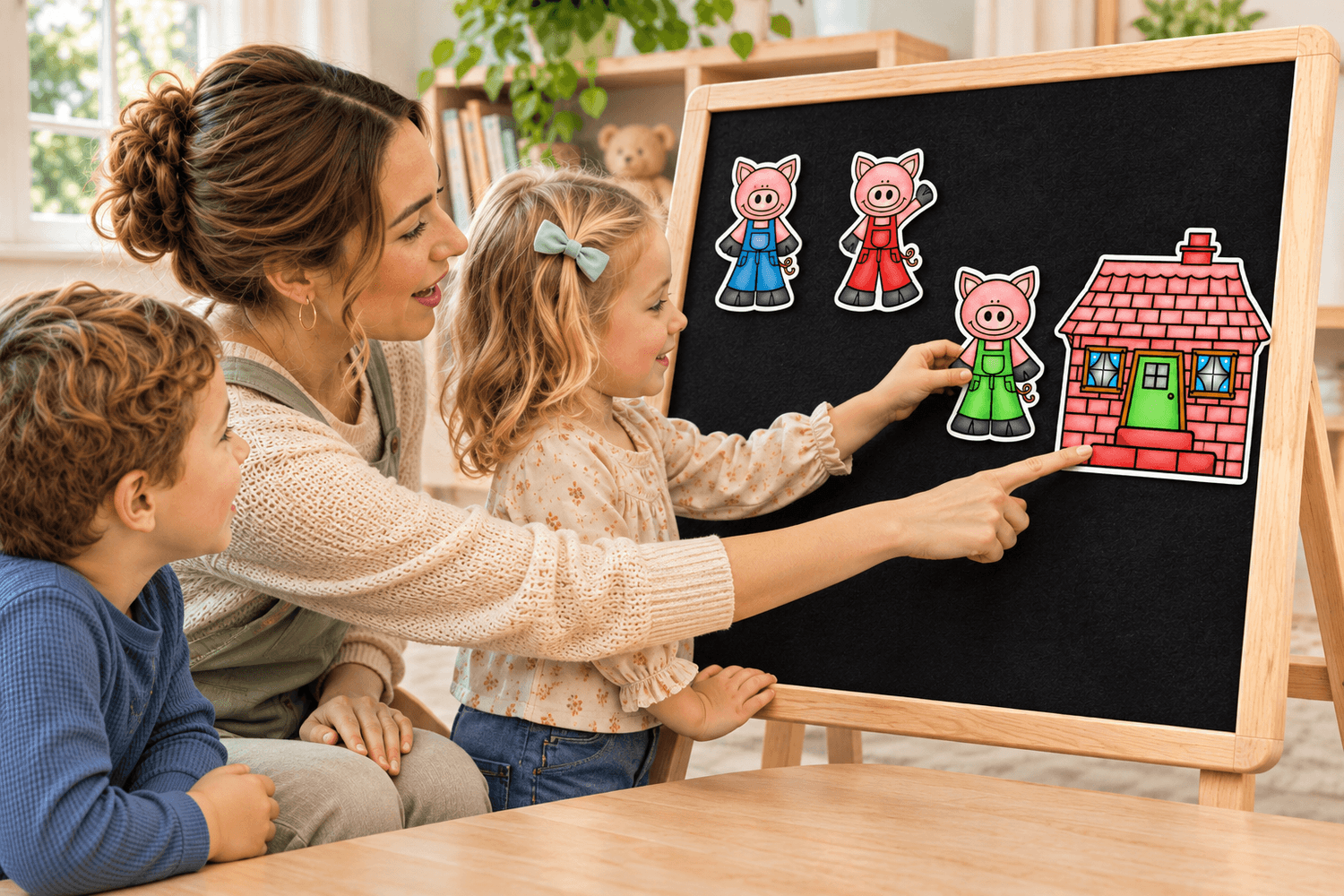
Ever thought about reviving an old-school favorite in your preschool classroom? A felt board literacy center gives children a place to tell and retell stories with pieces they can move.
These little fuzzy felt board stories are more than just images on felt—they're unique educational tools that build vocabulary and engage little minds in ways that’ll make you the classroom hero.
Choosing the Perfect Felt Board Spot
Location, Location, Location: Find a cozy corner where kids can gather and learn without distractions. Think of it as their little storytelling sanctuary. A well-chosen spot can transform into a magical nook where kids can't wait to huddle and play.
Accessibility: Make sure it’s within reach for all the kiddos. Avoid high-traffic areas to keep the learning vibe undisturbed. Pro tip: Group similar centers together to keep distractions at bay and focus at its peak.
Picking Your Felt Board and Easel
Three-Sided Felt Story Board and Easel: This bad boy is a dream! More surfaces mean more stories and more kids can join in. Cooperative play for the win!
Adjustable Height Easels: Alternatively, you can choose a two-sided board and easel, which can also come adjustable, to cater to different age groups effortlessly. With an adjustable board and easel, everyone gets to play without any height hassles. Whichever set you choose, ensure it adjusts easily, and you’ll be all set.
Setting Up Your Felt Board Literacy Center
Still deciding what kind of board fits your space? See our classroom flannel board setup guide for ideas.
Sleek Felt Background: Picture a tall easel with a chic black chalkboard felt background. It’s like a blank canvas ready for fuzzy felt characters to make their debut for a felt story board. Perfect for solo play or group activities.
Quick and Easy Setup: Go for a board and easel combo with a felt backdrop. No glue, no staples, just fun. It’s the easiest, most delightful setup you’ll ever find.
Organizing Felt Pieces
Themes and Stories: Sort felt pieces by themes or stories in bins or baskets. Categories like animals, seasons, or popular story themes make it easy to find and use specific pieces during storytelling.
Labels: Use pictures and words to label containers. This helps kids identify contents easily and supports early literacy skills. Plus, it makes cleanup a breeze!
Creating an Interactive Area
Standing Use: Each side of the easel can fit up to two children, promoting collaboration and social interaction.
Play Area: Add a rug or cushions nearby for a comfy play area. Make it inviting and cozy for extended periods of play. Think colorful and comfortable seating options.
Literacy center activities for preschool and kindergarten
Storytelling: Encourage kids to add felt pieces and create their own stories. After the retell, extend the theme with butterfly life cycle worksheets and have children describe what happened first, next, and last.
Teacher Tip: Encourage students to take turns being the "storyteller of the day," fostering confidence and creativity.
Letter Recognition: Use felt letters for spelling and letter recognition. Playtime Felts offers alphabet sets that support early literacy skills, aligning with Common Core standard CCSS.ELA-LITERACY.RF.K.1.D, crucial for preschool and kindergarten readiness.
Teacher Tip: Incorporate a daily "letter of the day" activity where students find and match felt letters to objects or pictures that start with that letter, reinforcing letter-sound relationships.
Interactive Games: Matching or sequencing games with felt pieces develop cognitive skills. Sets like Let's Make Patterns and Two Column Sort are great tools for preschool and kindergarten classrooms, promoting critical thinking and problem-solving.
Teacher Tip: Use felt pieces for a morning warm-up activity. Create a pattern or sequence and challenge students to replicate it or continue the sequence, stimulating their minds early in the day.
Vocabulary Building: Introduce new words through felt pieces and discussions. Try the Farm Animals worksheets or the Community Workers worksheets as follow-up activities. Naming and sorting the pictures connects with Common Core standard CCSS.ELA-LITERACY.L.K.5.C and supporting language development in young learners.
Teacher Tip: Create a "word wall" using felt pieces. Add new vocabulary words as they are introduced, and encourage students to use these words in sentences or stories during class discussions.
Encouraging Independent Play
Free Play: Let kids create their own stories during free play. This boosts imagination and storytelling skills.
Guided Activities: Offer prompts or story starters to inspire creativity. Rotate prompts to keep activities fresh and engaging.
Turn-Taking: Encourage kids to take turns telling parts of the story, fostering cooperation and listening skills.
Maintaining Your Felt Board Center
Regular Cleaning: Keep the felt board and pieces clean and well-maintained. Involve kids in the cleaning process to teach responsibility.
Rotation of Materials: Change stories and themes regularly to keep interest alive. Align themes with seasons, holidays, or classroom lessons.
Inventory Check: Regularly check for and replace missing or damaged pieces. An inventory list can help maintain your felt board set.
Felt Board Teaching Tips
Modeling Storytelling: Show kids how to create stories with the felt board. Use voices, gestures, and expressions to keep them engaged.
Interactive Questions: Promote critical thinking by asking open-ended questions about the story. Encourage deeper thinking with follow-up questions.
Multi-sensory Learning: Add sensory elements like sounds or props to enhance storytelling. Tactile elements can add texture and make stories more engaging.
Parental Involvement: Encourage parents to share stories at home and bring them to the classroom. This strengthens the home-school connection.
Thematic Integration: Align felt board stories with current classroom themes or curriculum topics for cohesive learning experiences.
Seasonal preschool themes
Rotate a few stories to fit the season. Try birds and farm animals in spring, ocean animals in summer, apple harvest activities in fall, and Arctic animals or the Nativity in winter.
Browse seasonal storytime activities for ideas to put on your shelf. In autumn, pair a story with one of these fall books for preschoolers.
Learning Through Play
Creating a felt board literacy center makes learning fun and enhances storytelling, literacy, and creativity. With the right setup and activities, your felt board area will be a magical spot where imaginations run wild and learning feels like play. So, gather your felt pieces, set up your easel, and let the storytelling adventures begin!
Want to try a story corner this week? Pick a free preschool worksheet bundle to pair with a story your kids already love.
Happy storytelling❣️
Adela O.