

The Very Hungry Caterpillar activities for preschool
One apple, two pears, and a little caterpillar who’s still hungry. Eric Carle’s The Very Hungry Caterpillar gives preschoolers a reason to listen for what comes next. Once they know the story, hand them a paper caterpillar and let them do some of the telling. Here are three ways to use the Playtime Felts printables for a read-aloud, a fruit-counting game, and a butterfly life cycle retell.
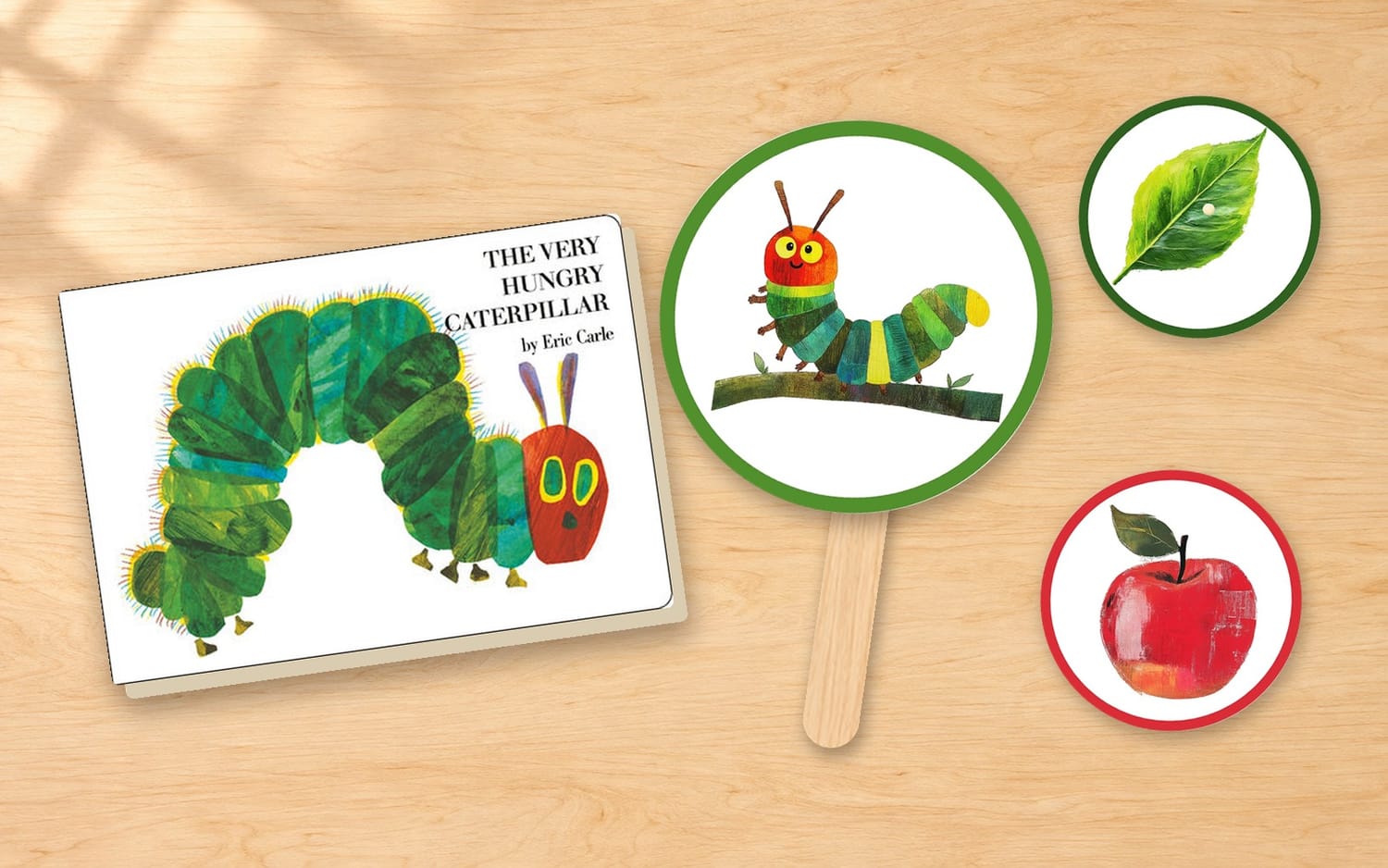
Read from your own copy or look for the board book on Amazon. If you’re planning a few hands-on read-alouds, see what’s inside Storytime Club for printable stories and worksheet bundles you can use throughout the year.
Set out just the pieces you need
The printable circles work well on cardstock. Cut around the colored borders and tape a wide craft stick to the back of the caterpillar circle for the first activity. The fruit and day cards can stay flat on the table. For the felt-board retell, add a hook-side dot to the backs of the four life cycle circles and test one on your board before preparing the others. A plain tabletop works for that activity, too.
Try setting out a little tray for each game. Put the caterpillar puppet, the egg on a leaf, and one or two foods in the first tray. Save the five weekday cards and their fruit circles for the second. Keep the egg, caterpillar, chrysalis, and butterfly together for the last game. Reuse the egg and caterpillar as you move from one activity to the next. If you’re new to felt storytelling, the classroom flannel board setup guide walks through the basics.
Activity 1. Read along with a caterpillar stick puppet
Before you open the book, put the egg-on-a-leaf circle and the caterpillar puppet where children can see both. Ask what they notice about the little dot on the leaf. Then begin reading. When the caterpillar hatches, invite a child to move the puppet into view. The small movement gives that child a job, and everyone else can wiggle a finger along with the caterpillar.
To make the puppet easier to pass, leave enough stick below the circle for a child to hold without covering the picture. Keep the food circles off sticks for this game so they sit flat while children tap or point. You can find the Hungry Caterpillar printable stick puppet set in the Playtime Felts Etsy shop.
Pause again at the apple. Put the apple and pear circles beside each other and ask which one belongs on that page. Have your child crawl the puppet over to the apple. When the pears appear, move it over to that card and let the child tap each pear once. Two children can play together, with one holding the caterpillar and the other choosing the food. Switch jobs before the next turn so both get a chance to tell part of the story.
If you’re reading to a whole group, give a few children one circle each before you start. Ask them to rest the pictures in their laps until they hear their food or character. For a first round, pick only a few moments to pause so the read-aloud keeps moving. A child who prefers to watch can point to the matching picture in the book or say the food name with the group. For more ways to share turns, browse the circle-time activities in Storytime Ideas.
On a repeat reading, give the puppet to your child and let them decide when it should crawl, stop, or look for more food. Try asking, “What should our caterpillar do now?” and wait a beat before helping. One child might move the puppet immediately. Another might answer with a food word or a short sentence. Either gives you something to build on. If you’d like more stories to act out this way, join Storytime Club for annual access.
Activity 2. Match the fruit to the day and count each piece
Lay out Monday, Tuesday, and Wednesday from left to right. Add the apple, pears, and plums underneath their matching days as you read. Start with just these three pairs if the group is new to the activity. When children are ready, add Thursday and Friday. The five pairs are Monday and one apple, Tuesday and two pears, Wednesday and three plums, Thursday and four strawberries, and Friday and five oranges.
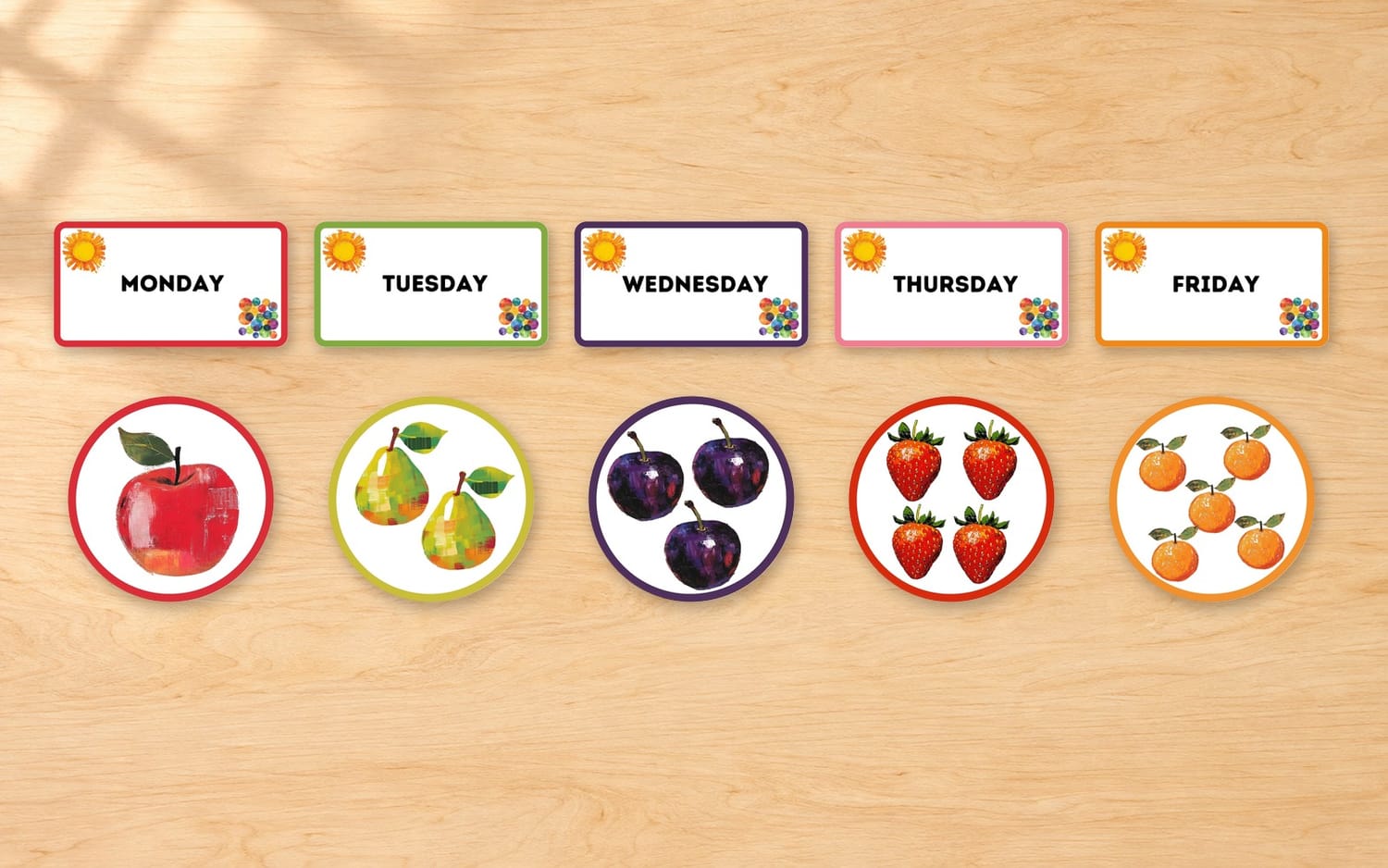
Count the pictures on each circle, touching a different fruit for each number you say. On Wednesday, for example, tap each plum and then say, “Three plums altogether.” If a child skips a plum or taps it twice, put your finger beside the first one and count together. The fruit circles show whole groups, so children can practice counting what’s on the card while still having just one piece to move.
For a second round, turn over the fruit circles and let a child pick one. Count the fruit together before deciding where the circle belongs. Ask, “Which day had four?” or “What comes right after Wednesday?” If weekday names are still new, keep the cards in order and say the names aloud together. Children can listen for the first sound of a day or use the colored borders as clues while they build familiarity with the words.
Try making one gap in the row. Leave Thursday in place and hide its fruit circle. Read Monday through Friday together, point to the gap, and ask what belongs there. Offer the strawberries and the oranges if a choice would help. Once the child puts the strawberries back, compare them with Friday’s oranges. Ask which card has one more and count both groups to check. For another short table activity, pick a theme from the free preschool worksheet collection.
Keep the weekend cards for a separate round. Saturday has several different foods, so a few of the supplied pieces, such as the cake, pickle, and watermelon, work well for naming and describing. On Sunday, bring out the plain green leaf. Put the egg-on-a-leaf circle nearby and ask children what looks different about the two pictures. It’s a quick way to check that they’re using the picture details to tell which part of the story they’re in.
Activity 3. Retell the butterfly life cycle on a felt board
Gather four circles for this round. Use the egg on a leaf, the caterpillar, the brown chrysalis piece, and the butterfly. Start with an empty board. Ask a child to place the first picture at the left, then invite another child to add what comes next. Leave space between the circles so small hands can lift and move a piece without pulling up its neighbor. If you’re working at a table, you can set out a strip of felt as a place to build the row.
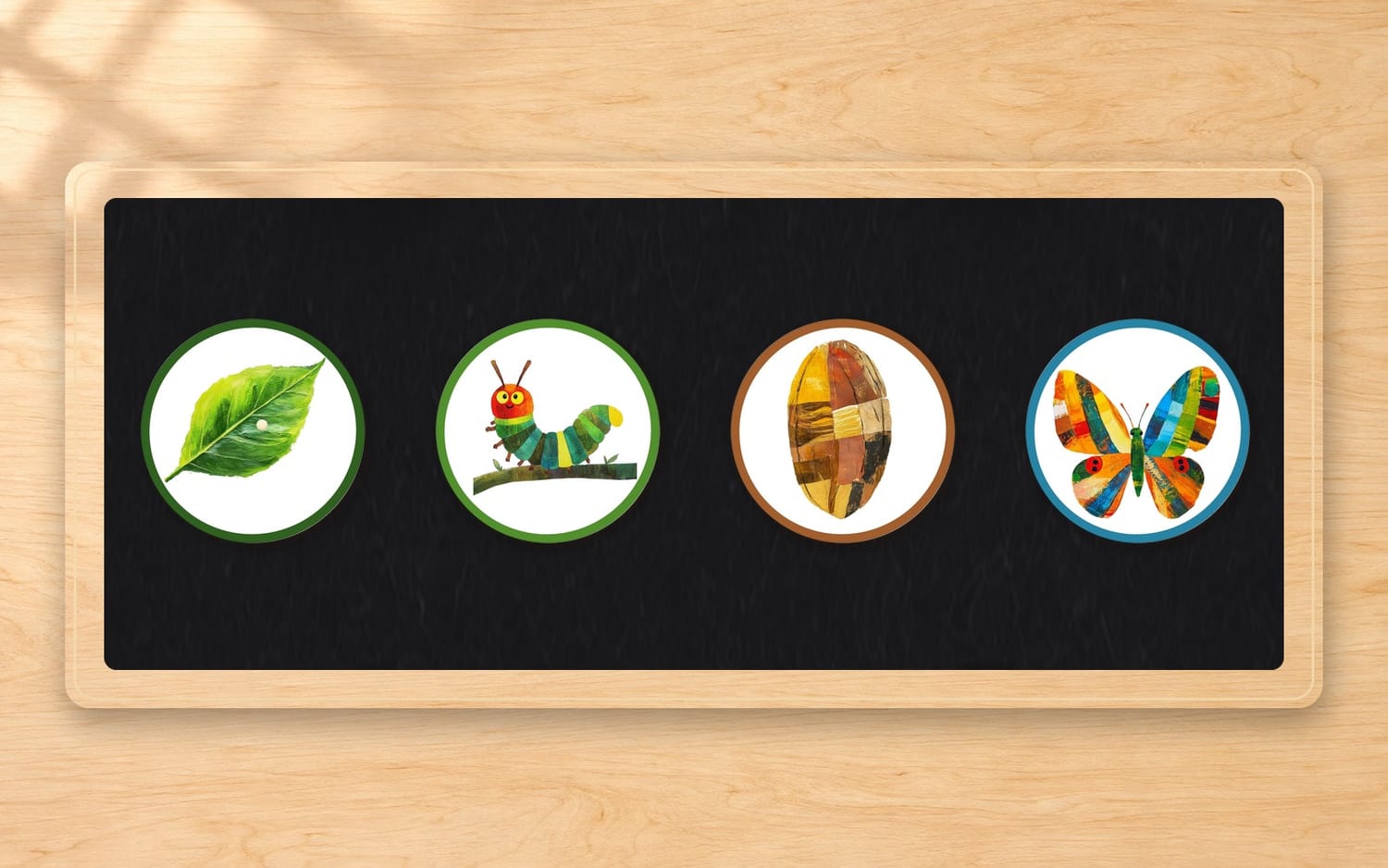
Use a short phrase for each stage as you point. The egg hatches, the caterpillar grows, the caterpillar becomes a pupa, and the adult butterfly emerges. The story calls its little house a cocoon. For a butterfly, the pupa is called a chrysalis. You can use the book’s language as you read and introduce chrysalis when you talk about the butterfly’s life cycle afterward.
When the four circles are in place, ask one child to tell what happens between the egg and the butterfly. Another child can point to the pictures while they talk. If the middle steps get mixed up, invite the group to look at the book again or offer a clue, such as “Which picture shows the caterpillar before it becomes a butterfly?” The felt board literacy center guide has ideas for keeping pieces within reach so children can revisit the story on their own.
For a movement break, have children make a small round shape with their hands for the egg, wiggle a finger for the caterpillar, fold their arms for the chrysalis, then gently stretch their arms out for the butterfly. Run through the movements once while you point to the row. Then let a child choose a card and lead the matching action. At home, tuck the four circles beside the book so your child can set up the sequence again whenever they like.
Once the children can tell the sequence, ask them to describe a change they can see. The caterpillar has a long body and the butterfly has broad wings. The two pictures give children something concrete to compare, and their observations can lead into a short look at other butterfly pictures or a drawing of their own.
Keep the pieces handy for another day
The three activities can fit across a few short storytimes. Read and use the puppet on the first day, count the fruit on the second, and bring out the butterfly sequence when children are ready to retell the ending. If the class wants to linger over the Saturday foods or compare the two leaf pictures, follow their interest. There’s no need to squeeze all three games into one reading.
For another picture-book companion, try the Brown Bear read-aloud and felt board activity. It uses the same simple rhythm of listening, choosing a picture, and letting a child show what comes next. If you’re building a shelf of go-to stories for the year, sign up for Storytime Club for annual access to the printable story library.


