

If You Give a Mouse a Cookie activities for preschool
One cookie sounds like a small favor. But in If You Give a Mouse a Cookie, written by Laura Numeroff and illustrated by Felicia Bond, that first snack sends Mouse from one request to the next. The fun is in hearing what comes next and realizing where the story ends up. With a Mouse stick puppet and a few printable props, children can join the read-aloud, put events in order, and make up a new chain of their own.
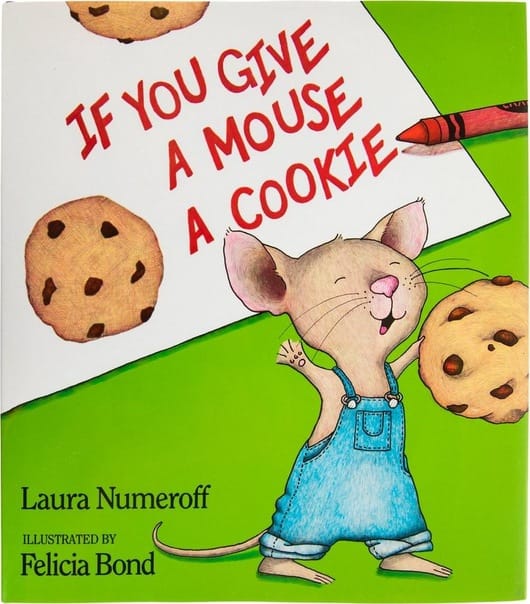
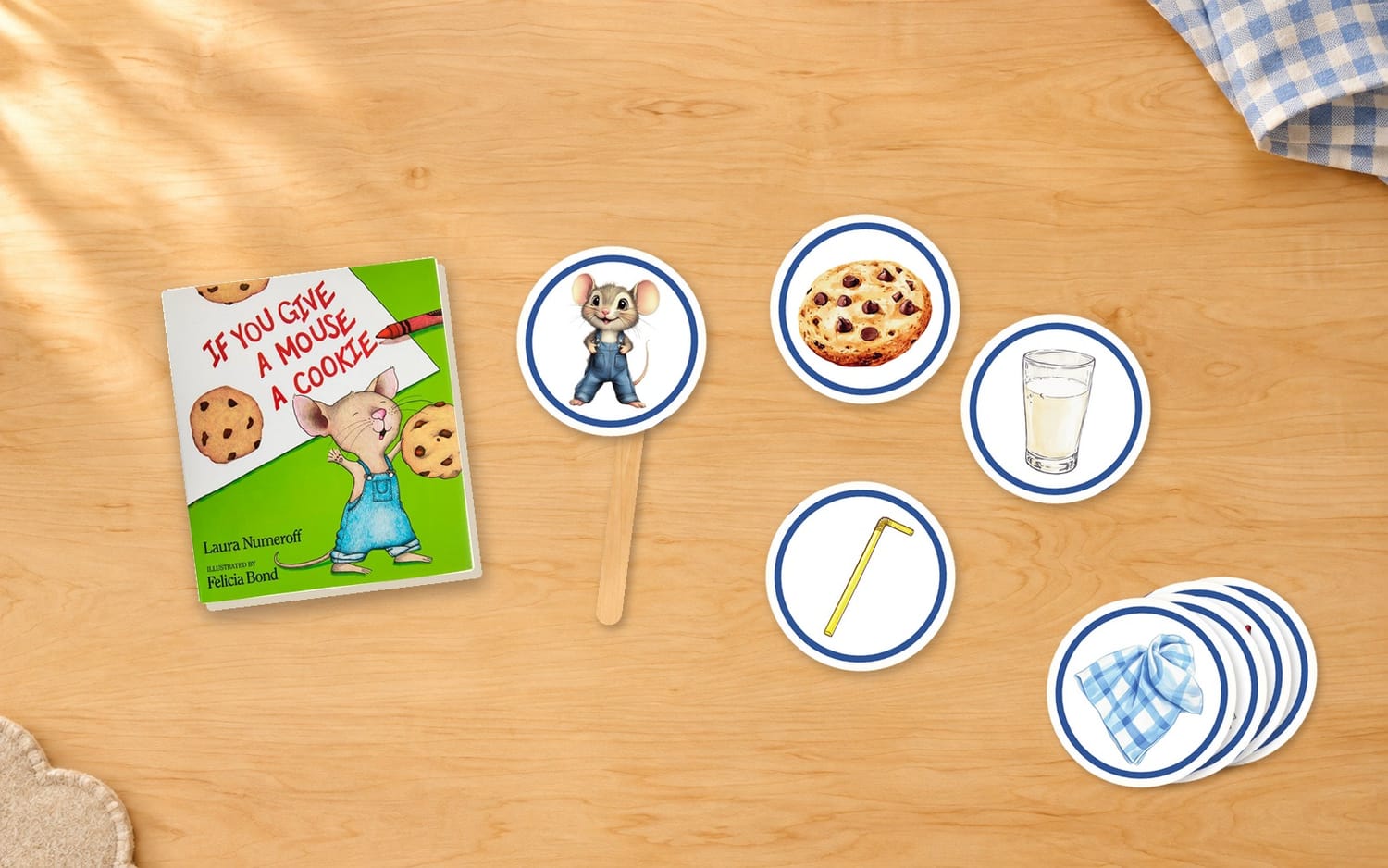
Read from your classroom shelf or library, then use the pictures to revisit the parts that made your group laugh. You can spread these activities over three short storytimes. For more books to pair with hands-on activities, browse Storytime Ideas.
Set out a few pieces before you read
Start with Mouse, the cookie, the glass of milk, and the straw. Print the pages you’ll use on cardstock and cut a little outside the blue circles to leave a comfortable white edge. Tape a wide craft stick behind Mouse, leaving room for a child’s hand below the picture. The cookie, milk, and straw can stay flat so children can move them on the table or hold them up like cards.
Keep the extra pictures in a shallow tray or a fanned stack at the corner of the table. Put the ones you expect to use first on top. That way you can reach for a prop without taking your eyes off the book for long. If you like to keep a few ready-to-read stories on hand, take a look inside Storytime Club.
Activity 1. Read along with a Mouse stick puppet
Hold Mouse beside the cover and give everyone a moment to notice something about him. Someone may spot his overalls or the cookie he’s holding. Then open the book and let one child bring the puppet into view when the snack appears. Invite another child to hold up the cookie picture. If you’re reading with one child, you can be Mouse and let your child handle the pictures.
When you reach the milk, pause and hold the glass and straw cards where everyone can see them. Let a child pick the picture that belongs with the part you just read. Then ask what would make it easier for Mouse to drink. A child can say “straw,” point to it, or pretend to sip. Follow their answer by naming the piece together. If you’re putting together a classroom story area, the felt board literacy center guide has ideas for storing props where children can reach them.
Once children know the opening, let them take over the pause. One child holds Mouse, a second shows the cookie, and another waits for the milk. Ask the children to watch the book and listen for their turns. You can quietly point toward the next helper if they need a cue. In a large group, give everyone else a small motion to do from their seats, such as making a pretend cookie with their hands or holding an imaginary glass.
On a second reading, invite children to use their own words for Mouse. A child might make him say, “Can I have something to drink?” or show him looking around for a straw. Give them time to finish the thought before you turn the page. A child who wants to listen the first time can take a turn with the puppet later. For another book with a simple cue to join in, try the Brown Bear read-aloud and felt board activity.
Activity 2. Build a cookie-to-straw sequence on the felt board
Set Mouse to the side as your storyteller. Place the cookie, glass of milk, and straw in a mixed-up group. Ask a child to find the picture that starts the story, then help them place the cookie at the left. Put the milk in the middle and the straw at the right. You can attach hook-side dots to the back of the cardstock pieces for a felt board. Test one on your board first. For more setup ideas, see the classroom flannel board guide.
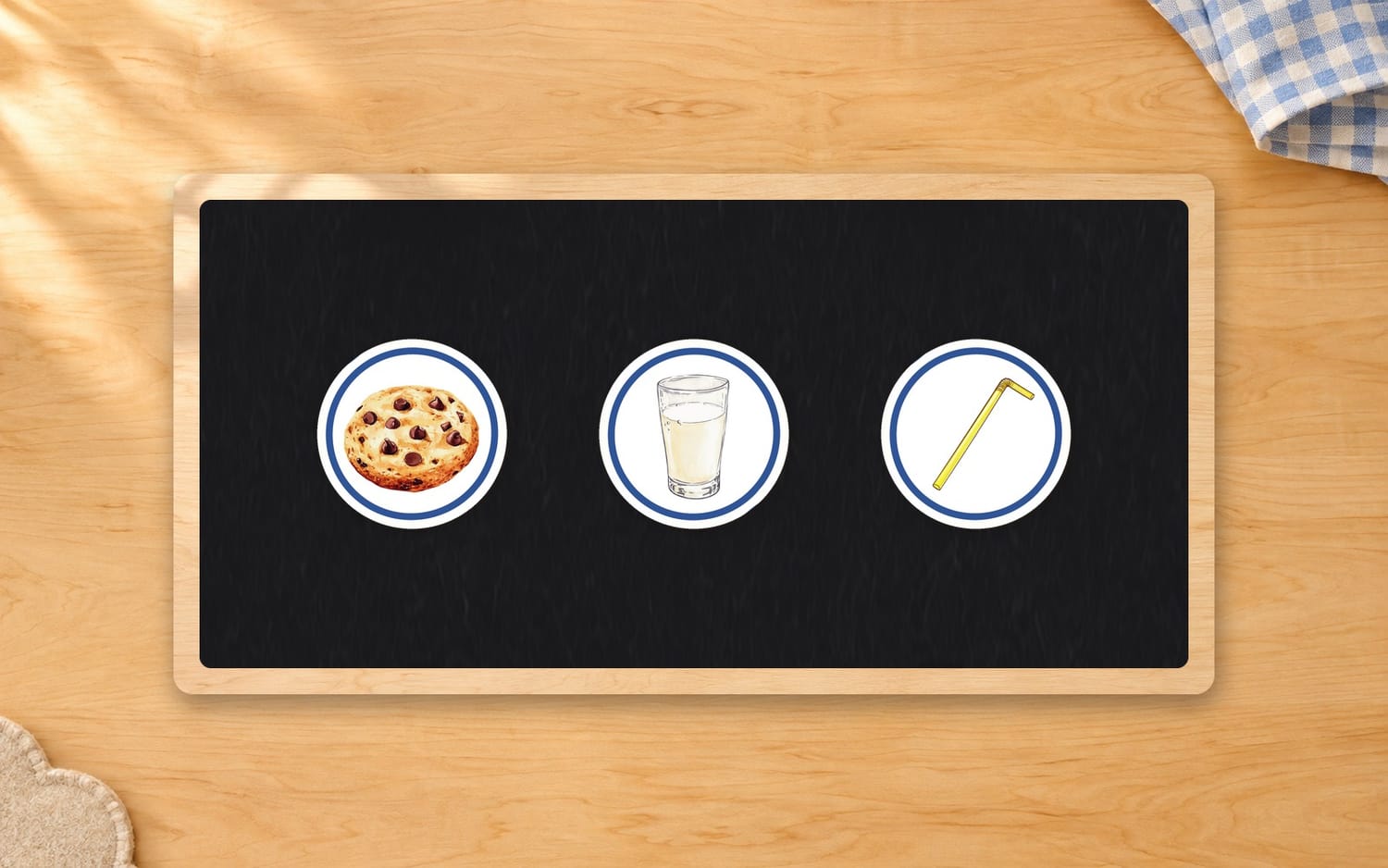
Point along the row while a child tells what happened. You can model the first turn with three short sentences in your own words. Mouse gets a cookie. He wants something to drink. Then he needs a straw. On the next turn, let the child point while you talk, or let them do the talking while you move the cards. Either way, they get a chance to connect the pictures with the events.
Next, take away the milk card and leave its space empty. Offer the milk and the crayon picture and ask which one fits the missing part. If a child picks the crayons, ask where Mouse might use those later. Then reopen the book and look together for the clue that helps fill the gap. For a simple paper follow-up, browse the free preschool worksheet themes and choose a page that fits your group.
When three cards feel easy, make a second row with a different section of the book. Try the paper, crayons, and picture cards to revisit Mouse’s drawing. Ask what he had to gather before he could make his picture. Invite an older child to connect the events with “because.” They might explain that Mouse needed paper because he wanted to draw. For another book that lends itself to putting events in order, see the Dog’s Colorful Day preschool activities.
To finish, put the cookie card at one end of the table and the plate of cookies at the other. Ask what those pictures have in common. You can take Mouse back to the first card to show how the ending points to the beginning again. Leave the cards out for a child who wants to retell it to a friend. If you’d like a year of stories to try this with, see annual Storytime Club signup.
Activity 3. Give Mouse a new job at the drawing table
Put the paper, crayons, drawing, and tape pictures on a tray with the Mouse puppet. Invite a child to choose what Mouse wants to do. Maybe he wants to make a picture for a friend. Ask what he needs first, then let the child pick a picture and tell you how Mouse will use it. The pieces can sit on the tray, leaving enough space to add each choice as the child talks.
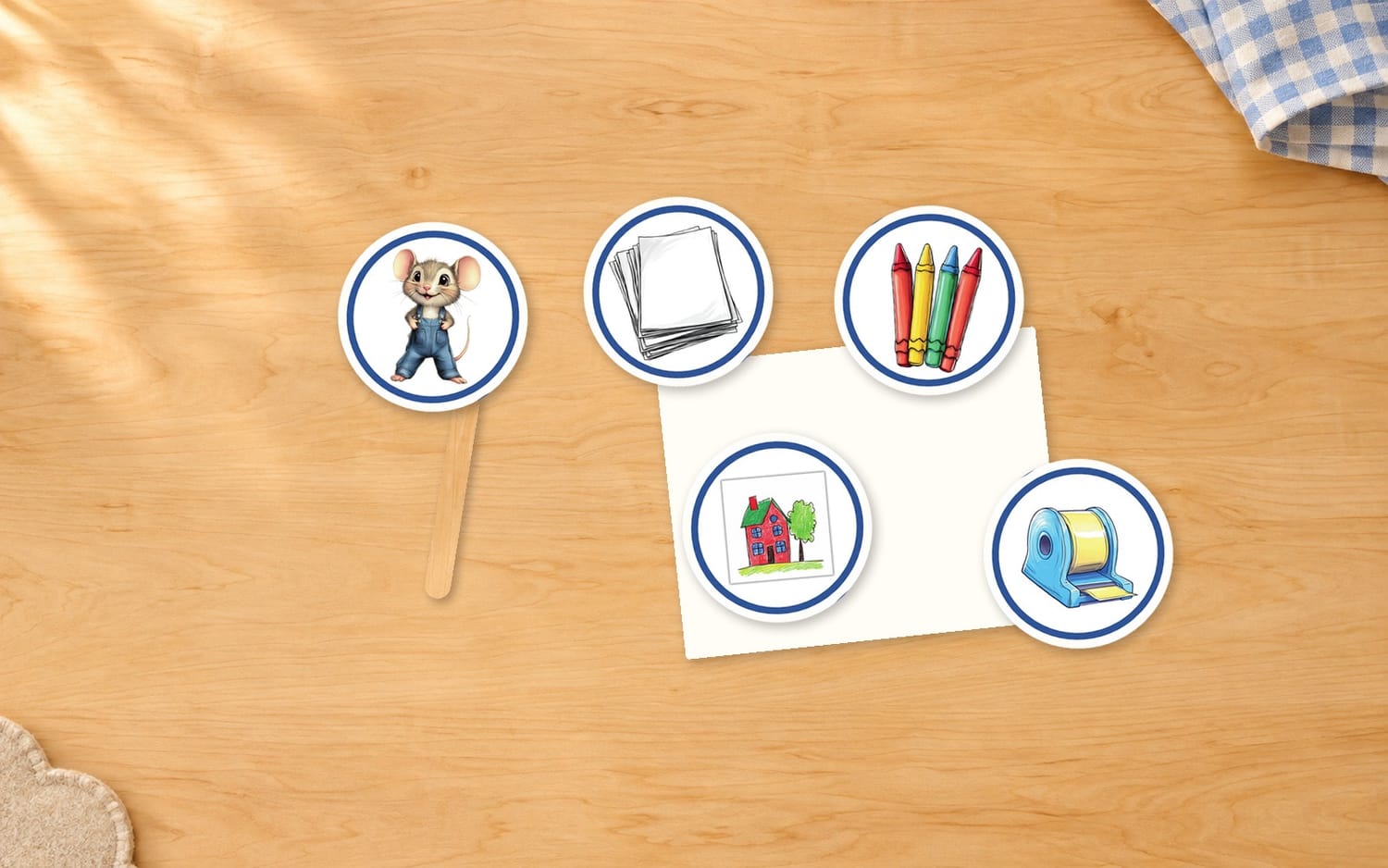
Try making a fresh chain together. Mouse wants to draw a house, so he needs paper. Once he has paper, he needs crayons. When the picture is ready, he needs tape to hang it. Let your child swap in a different idea anywhere along the way. A child might draw a cookie, then decide Mouse wants to hang it by the fridge. The important part of the game is hearing how one idea leads to the next.
If children want to draw their own ending, offer real paper and crayons beside the pretend props. Invite each child to add their drawing as the final card. Ask where Mouse might put it or what he might need after that. For a partner turn, one child can be Mouse while the other picks a prop that fits the request. Switch after two or three requests so both children get to tell part of the story. Browse the Playtime Felts shop for more printable story pieces to use in similar games.
For a younger group, offer two choices and show how either one might start a story. For children ready for more of a challenge, ask them to bring their story back to the first picture, the way the book comes back around to cookies. You might hear that Mouse’s drawing makes him think of a snack again. Once they have a chain they like, let them perform it for the group with the puppet. Find more ideas for another read-aloud in Storytime Ideas.
Keep the pieces handy for another day
For a quick check after storytime, hand a child the cookie and straw cards and ask them to tell you how those two pictures go together. If they reach for the milk without a prompt, invite them to put all three in order. If they need a reminder, open the book and let them find the page that helps.
Store Mouse, the first three story cards, and the drawing props together in a labeled envelope beside the book. The next time you read, ask children which game they want to try again. They may remember the straw, point out that cookies show up twice, or have a brand-new request for Mouse. A familiar story gives them a comfortable place to try a longer answer or take the lead with the puppet.
If your group enjoys following a trail of food pictures, try The Very Hungry Caterpillar preschool activities next. Set out just a few pieces, pause when a child has something to show, and give the pictures another turn after the book is closed.


